
Swish Sports
Swish LLCSports
1.7172.00 Reviews
- Version
- 4.1.4
- Installs
- 50.00K
- Age Rating
- Everyone
Screenshots
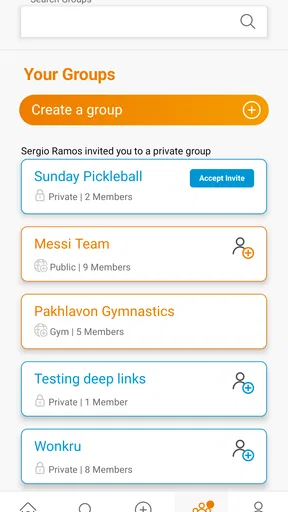
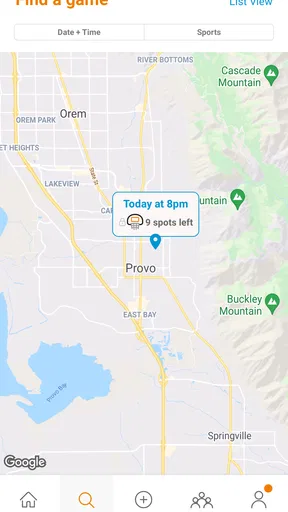
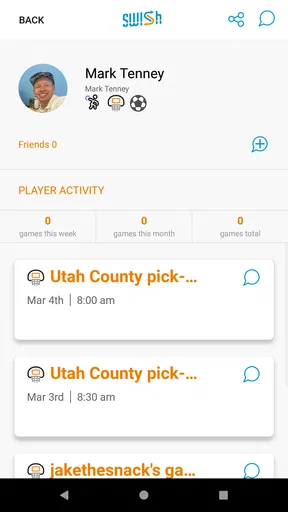
Our Review of Swish Sports
 Analysis by Appyee
I tried Swish Sports as a way to turn the vague idea of “we should play sometime” into an actual pickup game. That is the app’s central appeal: it is built for people who want to create, discover, or join casual sports sessions instead of arranging everything through scattered group chats. As a free sports app from Swish LLC, it feels most useful when a group already has the energy to play but needs a simple place to organize the details.
My first impression was mixed. The concept is easy to understand, and the app can be attractive during the first week because it focuses on a very practical problem: finding enough people at roughly the same time and place. At the same time, the public response is not especially reassuring. It has an average rating of 1.7 from around 246 ratings, with roughly 172 written reviews, and that low score is important context for anyone deciding whether to rely on it regularly.
I would not dismiss it immediately, though. Pickup sports are often poorly served by conventional alternatives. A general messaging app can coordinate friends, but it does not naturally help you discover players outside your own contacts. A social network may offer groups, yet those groups can be noisy or inactive. A calendar app can record a game after it has been arranged, but it does not help create the game in the first place. Swish Sports sits in that gap, and for the right local community, that difference matters.
What the first week feels like
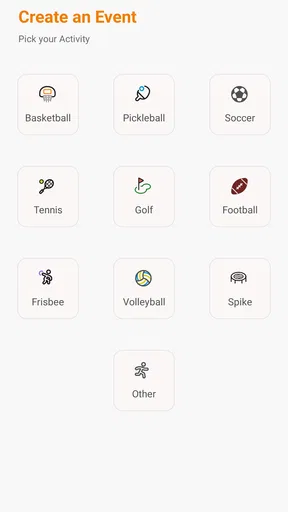
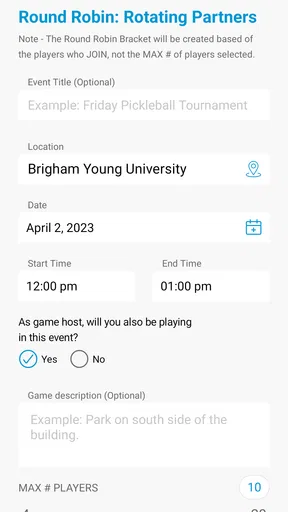
The first-week appeal comes from the possibility of seeing sports as an open invitation rather than a private plan. Instead of asking several people individually whether they are free, I can think in terms of a session: choose the sport, decide when and where it should happen, and let interested players respond. That change in mindset is small, but it can make a casual game feel much easier to start.
The most useful way to approach the app is with a specific intention. If I open it hoping that it will instantly show a busy, perfectly matched community in every sport and location, I may be disappointed. If I use it to support a game I am already trying to organize, it has a clearer job. This distinction is one of the most important practical lessons: the app is more valuable as a coordination layer than as a guaranteed source of instant activity.
During an initial setup, I would first look for the sports and locations that are genuinely convenient rather than joining anything that appears vaguely interesting. A game that is ten minutes farther away can be the difference between attending regularly and abandoning the idea after one attempt. Pickup sports depend heavily on routine, so the best early test is not whether the app can produce one exciting invitation. It is whether I can find a realistic session that fits my normal week.
Another useful first-week habit is to treat joining as a commitment rather than a bookmark. Casual games often fail when people express interest but do not actually show up. I would only join sessions I can reasonably attend, and I would check the time and location again before leaving home. That may sound obvious, but an app that makes participation easy can also make casual promises feel less serious.
The experience is likely to be strongest when several people in the same area use it at once. A single user cannot create a healthy pickup scene alone. If my friends already play one sport together, inviting them to use the same place for scheduling may produce more value than waiting for strangers to appear. Once a small group has a habit, the app’s discovery function becomes more meaningful because each new session has a better chance of attracting enough players.
I also see a useful role for people who have recently moved. Joining an established recreational club can feel too formal, while approaching strangers at a court or field can be awkward. A pickup-focused app offers a middle ground: the activity itself gives everyone a reason to meet. Still, I would judge each session by its clarity. Before attending, I would want to know exactly what sport is being played, when it begins, where people should meet, and whether the group expects beginners or experienced players.
Who gets the quickest benefit
The strongest early users are people with flexible schedules, a nearby place to play, and at least one sport they already enjoy. The app can also suit a friend group that regularly loses track of plans in a busy chat. By moving the game itself into a dedicated sports space, the group can reduce the number of messages needed to settle on a time.
It is less convincing for someone who wants a formal league, fixed standings, coaching, or a carefully managed club structure. The appeal here is casual participation, not a replacement for organized competition. It is also a weak fit for anyone who lives in an area where very few local users are active. In that situation, a local community group, recreation center, or established club may produce results faster.
The app is free to download, which lowers the barrier to trying it. However, in-app purchases range from $3.99 to $29.99 per item. I would therefore explore the basic experience before spending anything. A free entry point is helpful, but it should not be confused with a promise that every useful capability will remain free or that paying will solve the local-activity problem.
Whether it keeps earning attention after the novelty
The harder question is what happens after the first few games. A sports organizer can feel exciting at the beginning because every new invitation looks like a possible social opportunity. Over time, the novelty fades and the app has to earn its place through repeat usefulness. For me, that means making weekly planning easier, helping a group replace missing players, or giving me a dependable way to discover a session when my usual friends are unavailable.
Recurring value will depend less on how attractive the interface feels and more on whether the local activity stays alive. If the same people return, the app can become a lightweight routine: check upcoming sessions, join one that fits, and show up. If invitations remain sparse or players frequently cancel, I would gradually return to direct messages and familiar real-world contacts because those alternatives provide more certainty.
A practical monthly workflow would be to use the app at the start of each week rather than checking it constantly. I would look for one or two sessions that fit my schedule, join only the best match, and then use the result of that game to decide whether to keep using the platform. This avoids turning the app into another feed that demands attention without producing activity. It also makes the test fairer: I am measuring completed games, not the number of times I opened the app.
There is a subtle trade-off between openness and reliability. A broad pickup network can help new players participate, but open groups may vary in skill, punctuality, and communication style. A private group of friends is usually more predictable, yet it offers less discovery. Swish Sports makes more sense when I value access to new players enough to accept some uncertainty. If my priority is a guaranteed level of play or a fixed social circle, a dedicated club will probably be better.
The app’s install base is over 50K, which suggests that the idea has reached more than a tiny experimental audience. That is encouraging, but it does not tell me whether there are enough active players in my neighborhood or for my chosen sport. Local density matters far more than the overall install figure. I would test the app in the exact area where I plan to play and give it a short, realistic trial instead of assuming broad reach guarantees local activity.
One of the more useful ways to keep the experience healthy is to create a repeating personal pattern around it. For example, I might reserve one evening for a casual game and use the app to find or organize something suitable each week. The app cannot create motivation by itself, but it can reduce the planning friction between wanting to exercise and actually meeting people. That is a meaningful role if the sessions remain dependable.
For people who exercise alone, the social benefit may be more important than the scheduling benefit. A solo runner can head outside without anyone else, but team sports often need a minimum number of participants. In that setting, the tool addresses a real structural problem. On the other hand, if I already have a stable group and only need a recurring reminder, a normal calendar may be simpler and less distracting.
The work required to keep it useful
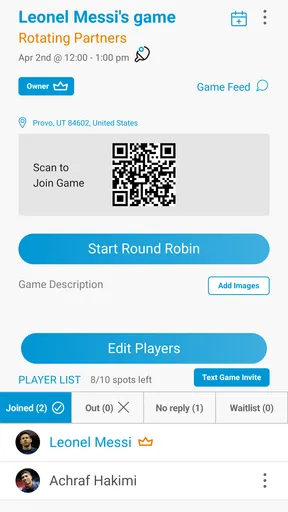
Any pickup platform has a maintenance burden, even when the interface itself is easy. Someone has to create sessions with accurate details, respond to changes, and notice when the plan no longer has enough players. If I create an event and then ignore it, other users may waste time traveling to something that has quietly fallen apart. That responsibility is easy to underestimate during the first enthusiastic week.
I would keep invitations specific. A vague title such as “basketball later” creates unnecessary questions, while a clear session gives people enough information to make a decision quickly. I would also update the plan as soon as the location or time changes. The app can organize information, but it cannot compensate for an organizer who leaves old details visible.
There is also a social maintenance cost. If I repeatedly join and cancel, other players may stop trusting my participation. In a small local community, reliability becomes part of the product experience even though it is created by users rather than software. My advice is to use the join function only when I have checked my schedule, transport, and likely energy level.
Another useful workflow is to establish a backup plan before the game begins. If a session needs a certain number of players, I would know whether the group is comfortable playing with fewer people or whether the event should be postponed. That small decision prevents last-minute confusion. It also reveals whether the app is supporting a flexible recreational group or trying to carry a more formal event than it was designed to handle.
Privacy and comfort deserve ordinary common sense. Meeting people through a sports app is different from messaging existing friends, so I would choose public, familiar venues and avoid sharing unnecessary personal details. I would also tell a friend where I am going when attending a session with people I have never met. These precautions are not a criticism of this particular app; they are sensible habits for any service that connects local participants.
The age classification is Everyone, which makes the app broadly approachable from a store perspective. In practice, the suitability of a particular session still depends on the players, the venue, and the sport. Parents or younger users should use their own judgment about supervision and local arrangements rather than treating an age label as a substitute for context.
Where fatigue begins
The main source of fatigue is uncertainty. When I open a sports organizer, I want to know whether a session is genuinely happening, not merely listed. If I have to send several messages to verify attendance, the app loses much of its advantage over a group chat. A platform like this needs enough active participation to make each listing feel current and trustworthy.
Another tiring point is the gap between discovery and completion. Finding a game is only the first step; the session must still have a workable time, a reachable venue, enough players, and compatible expectations. A long list of possibilities is not automatically useful. One well-matched game is better than many uncertain ones, especially for someone fitting exercise around work or family responsibilities.
There can also be friction when different users imagine different kinds of pickup play. One person may expect a relaxed beginner-friendly game, while another expects intense competition. If the app does not make those expectations clear enough, the resulting mismatch can make both sides less likely to return. I would ask a brief question before attending if the level or format is unclear, even if that adds one more step.
The low average rating should remain part of the decision, not something to overlook because the idea sounds useful. A rating around 1.7 is a warning that some users have encountered serious dissatisfaction. Ratings do not explain every local experience, and a poor score may affect different versions or regions differently, but I would not build my entire exercise routine around this app without testing it first.
Version 4.1.4 is the current version, and the app supports Android 7.0 or later. That makes it accessible to many older Android devices, which is helpful for a community service where not every player upgrades phones frequently. Still, compatibility is not the same as a smooth experience on every device. I would install it on the phone I actually use for commuting and navigation, then confirm that the core actions are comfortable before inviting a whole group.
The developer, Swish LLC, has chosen a focused concept rather than trying to be a general fitness tracker. That focus is a strength when I need people for a live game, but it also means the app should not be judged by features belonging to other sports categories. It is not the obvious choice if I mainly want workout logging, route tracking, training plans, or performance analytics. For those needs, a dedicated fitness app is more appropriate.
I would also skip it if my preferred sport has a strong existing booking system nearby. A recreation center, university facility, or local club may already provide confirmed times, courts, and player communication. In that case, adding another layer may create more maintenance than value. Swish Sports earns its place when it solves a coordination problem that those established options leave open.
My long-term verdict
After the initial excitement, I see Swish Sports as a conditional recommendation rather than an automatic one. It has a clear purpose and can be genuinely useful for spontaneous team sports, especially when a local group is large enough to keep sessions moving. The best outcome is not endless browsing; it is a simple habit that leads to real games with minimal back-and-forth.
I would recommend trying it to a person who has recently moved, wants to return to a team sport, or keeps losing casual plans in a crowded chat. I would tell that person to test the exact sport and neighborhood first, attend only sessions with clear details, and judge the app by whether games actually happen. That approach keeps expectations realistic and avoids confusing downloads or invitations with lasting value.
I would not recommend depending on it as the only way to find exercise partners. The low user rating, the need for local activity, and the human effort required to keep sessions accurate all create real risk. A group chat may be better for a trusted circle, a club may be better for structured competition, and a fitness app may be better for individual training. The right alternative depends on whether my problem is finding people, managing a known group, or tracking my own progress.
For me, the lasting test is maintenance. If I can open the app once or twice a week, find a realistic session, and see familiar players returning, it deserves a permanent place on my phone. If I spend more time checking whether games are still alive than playing, the novelty has ended. Its recurring value comes from dependable local participation, not from the promise of discovery alone.
Swish LLC has made a free sports app that addresses a real everyday obstacle: wanting to play but not having enough people organized at the same time. That is a worthwhile idea, and the Everyone age rating plus support for Android 7.0 or later make the initial trial straightforward for many users. My final advice is simple: try it with a concrete game in mind, involve a small group, and keep a backup communication method. If it turns intentions into regular meetups, it has earned its space; if it only produces occasional listings and uncertainty, a more established local option will serve you better.
Verdict
Strengths of Swish Sports
- Covers multiple sports with scores, schedules, and live updates in one app.
- Clean interface makes it easy to follow teams, leagues, and competitions.
- Useful notifications help users stay informed about important match events.
- Provides quick access to fixtures and results without lengthy loading times.
- Suitable for casual fans who want essential sports information on the go.
Limitations of Swish Sports
- Coverage and features may vary depending on the sport or competition.
- Some live updates can arrive with a slight delay during busy matches.
- Frequent notifications may feel excessive unless alerts are customized.
- Advanced statistics may be limited compared with dedicated sports platforms.
- An internet connection is required for current scores and live information.
Similar Picks in This Category
View All
BeSoccer: Soccer Live Score
BeSoccer apps4.3

Cricbuzz - Live Cricket Scores
Cricbuzz.com3.7

NFL
NFL Enterprises LLC2.4

Da Fit
MO YOUNG LIMITED3.6

ESPN
Disney4.5

LiveScore: Live Sports Scores
LiveScore Limited4.5
Frequently Asked Questions
What is Swish Sports and what can I use it for?
Swish Sports is a sports-focused app designed to help users follow sporting events, discover schedules, check scores, and stay informed about teams or competitions. Depending on the version and region, available features may include live updates, match information, news, statistics, or personalized alerts. Before downloading, check the current store description because supported sports and features can vary by platform.
Is Swish Sports free to download and use?
Swish Sports may be available as a free download, but some features could require in-app purchases, a subscription, registration, or access through a supported service. Users should review the pricing information shown on Google Play or the App Store before installing it. Also check whether advertising, premium content, or additional charges apply to specific tools, competitions, or live coverage.
Does Swish Sports provide live scores, streaming, or real-time match coverage?
The app may offer live scores, event schedules, match statistics, notifications, or other real-time information, but this does not necessarily mean that it provides live video streaming. Coverage can depend on the sport, competition, location, and licensing agreements. If watching games is important to you, confirm exactly what live features are offered in your country before downloading.
What permissions and personal information does Swish Sports require?
As with many sports applications, Swish Sports may request permissions for notifications, internet access, and possibly location or account information if it offers local events or personalized content. Only grant permissions that are necessary for the features you want to use. Before creating an account, review the app’s privacy policy to understand how login details, usage data, and device information may be collected or shared.
Is Swish Sports compatible with my Android or iPhone device?
Compatibility depends on your device model, operating system version, and the current requirements published in the relevant app store. Check the Swish Sports listing for the minimum Android or iOS version, storage needs, and any regional restrictions before installing. Keeping your phone updated can improve performance, although older devices may experience slower loading, limited notifications, or reduced support for newer features.
